
Monthly Solar Geoengineering Updates (December'2025)
From NCAR’s potential shutdown & Guardian’s sun-dimming debate, to the launch of an African-led SRM hub, EU’s first governance conference & cutting-edge research, SRM dominated headlines & labs alike.

We put significant time & effort into compiling this resource for you. If you can, please consider becoming a paid subscriber. Your support sustains this work and helps us reach a wider audience.
Follow us on:
Twitter | Bluesky | LinkedIn | Google Group | Podcast

TOP 10 SRM UPDATES FROM DECEMBER 2025
Potential Shutdown of NCAR
The Trump administration plans to dismantle the National Center for Atmospheric Research (NCAR), a leading global climate and weather research hub in Boulder, Colorado, drawing sharp criticism from scientists who call it “the global mothership” of climate science. NCAR has also been a major force in U.S. solar geoengineering research, developing advanced models like the Whole Atmosphere Community Climate Model (WACCM) and Community Earth System Model (CESM) to simulate stratospheric aerosol injection and its global climate responses, assess ozone-aerosol interactions, and provide policy-relevant insights into potential climate intervention strategies.

Guardian Sparks SRM Debate
The Guardian sparked debate with an editorial urging ministers to pull back from SRM research, warning that “sun-dimming” could put the planet’s thermostat under Donald Trump’s control and calling for the precautionary principle. In response, three letters challenged the stance. Baroness Bryony Worthington argued the paper was amplifying fear that stifles scientific inquiry. Prof Hugh Hunt stressed SRM is not a solution to global heating but a potential stopgap as emissions cuts lag. Dr Portia Adade Williams and Angela Churie Kallhauge warned that shutting down research misrepresents African views, silences scientists, and increases vulnerability by limiting informed dialogue.

SRM Governance Horizons
The Alliance for Just Deliberation on Solar Geoengineering (DSG) announced a new strategic initiative called “SRM Governance Horizons” to explore how political, financial, technological and socio-cultural forces will shape emerging governance pathways for solar radiation modification. The project will develop a readiness framework to assess whether institutions and communities have the information, decision-making authority and representation needed to respond before private interests or political urgency drive outcomes by default. DSG says the work is not about preparing SRM for deployment, but about strengthening anticipatory, inclusive governance and public oversight of evolving SRM debates.

Sandro Vattioni Wins Award in SRM Field
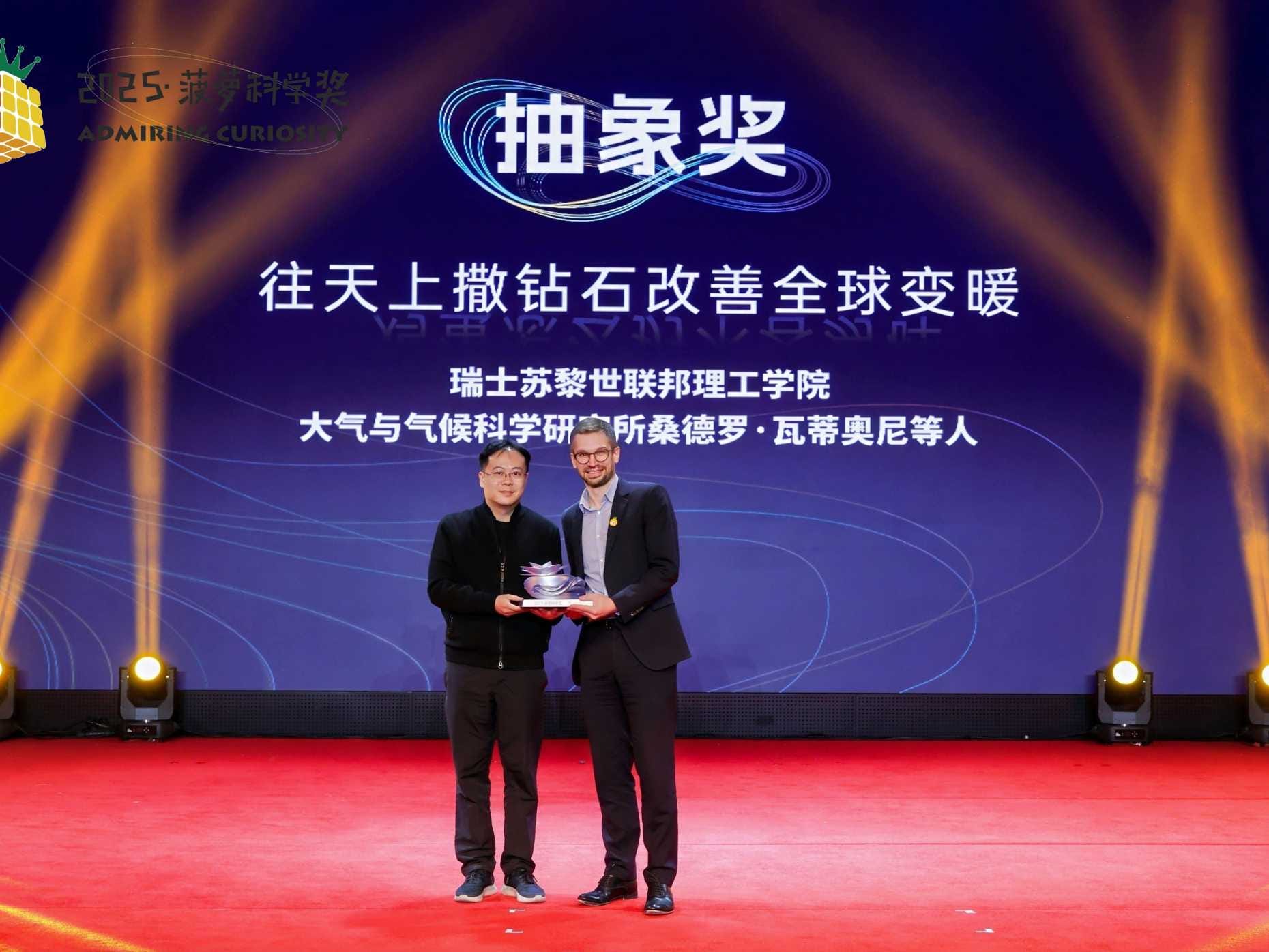
ETH Zürich researcher Sandro Vattioni has won China’s 2025 Pineapple Science Award, the Chinese equivalent of the IgNobel Prize, for a study exploring whether diamond dust in the stratosphere could help cool the climate. His research examines how particles behave in the upper atmosphere, helping determine which materials could or could not work for solar geoengineering.
First SRM Governance Conference in EU
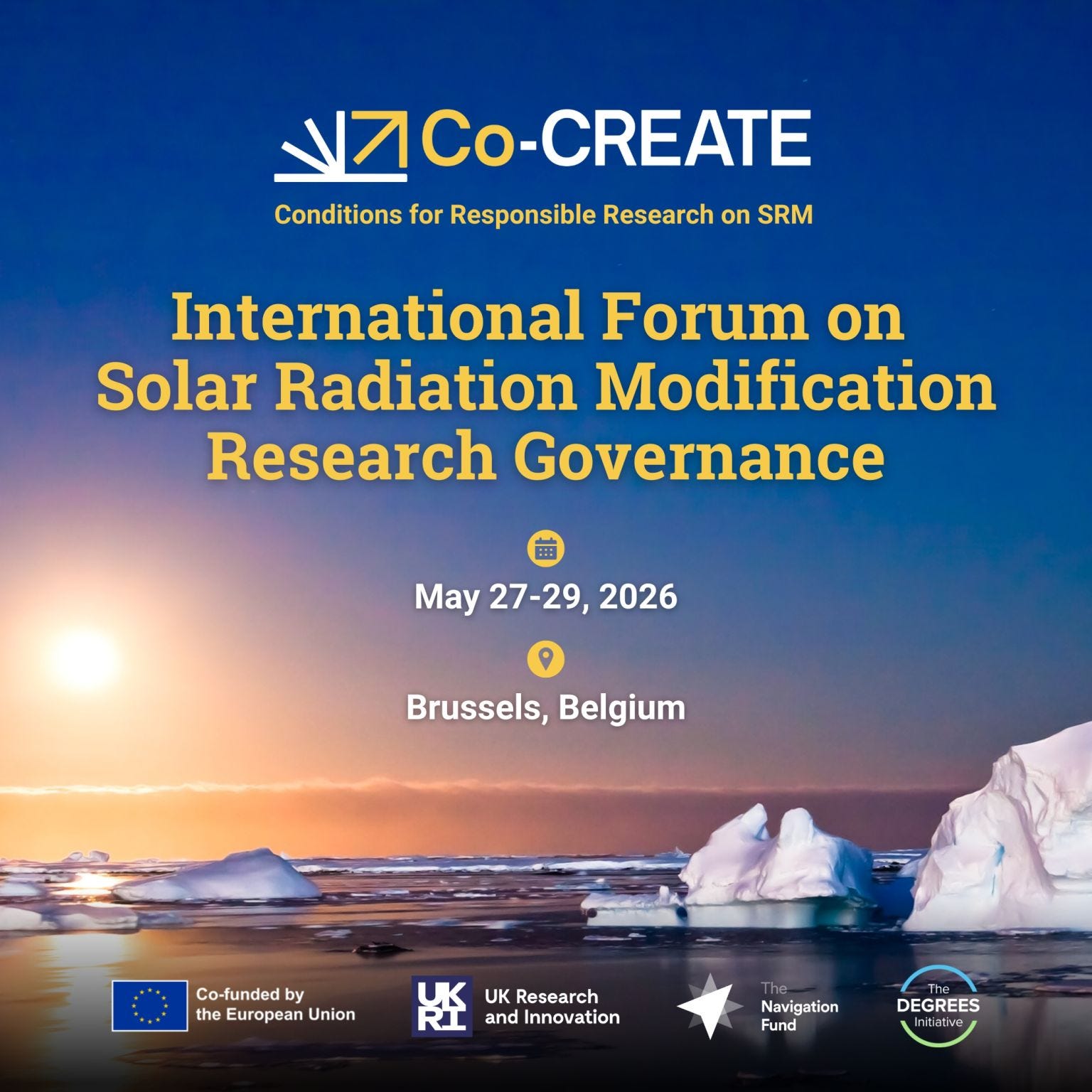
The EU‑funded Co‑CREATE Project will host the International Forum on Solar Radiation Modification Research Governance in Brussels from May 27-29, 2026, marking a first dedicated SRM research conference in the EU. The forum aims to foster evidence‑based dialogue among researchers, policymakers, civil society, and international stakeholders on SRM research governance, conditions for responsible study, and policy innovation for guiding future solar radiation modification research.
Marine Cloud Brightening Could Protect Arctic and AMOC
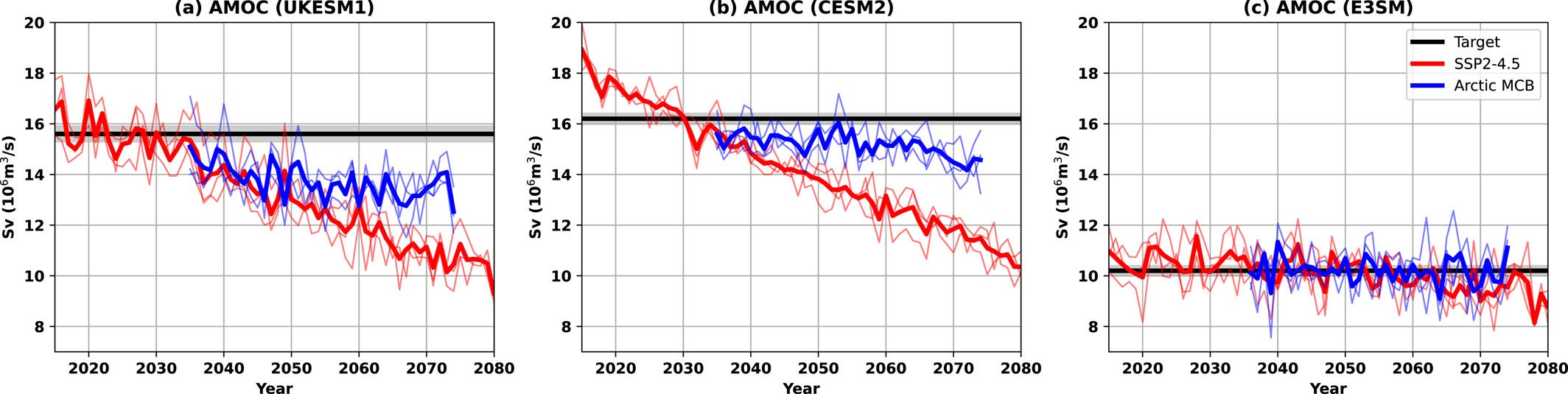
A multi-model Earth’s Future study finds MCB via sea-salt aerosol injection could cool the Arctic and help maintain sea ice by making clouds more reflective. Across three Earth system models, MCB substantially cools the region and, importantly, helps sustain the Atlantic Meridional Overturning Circulation (AMOC) under mid-century scenarios, reducing risks of broader climate disruptions linked to a weakened AMOC. Listen to the discussion on this paper here.
UNEA-7 and SRM
At UNEA-7 in Nairobi, solar radiation management was absent from the formal agenda and no resolution was tabled, yet it featured in informal discussions among civil society, youth, researchers, and some policymakers. According to the CIEL group, the Africa Group launched a new initiative on the sidelines of UNEA-7 to begin a plurilateral dialogue on a Solar Geoengineering Non-Use Agreement, seeking to ban funding, experiments, patents, and official promotion, building on the recent African Ministerial decision at AMCEN20. Read DSG’s reflection on this event here.
Planetary Sunshade Workshop
The 1st IAA Planetary Sunshade Workshop is set for 13–15 May 2026 at the University of Nottingham, convening engineers, scientists and policy experts to advance the emerging field of planetary sunshades as a potential climate cooling approach. Over three days, participants will share technical progress, align on promising proposals, and strengthen interdisciplinary collaboration to accelerate research and future capacity in space‑based sunlight reflection. Proposal submission deadline is 31 January 2026.
African Climate Intervention Research Hub
The African Climate Intervention Research Hub (ACIRH) has launched its new website, creating a central platform for African-led expertise, collaboration, and resources on climate intervention. The hub unites scientists and institutions across the continent to strengthen capacity and leadership in solar radiation modification and broader climate governance, emerging from African-led collaboration supported by The Degrees Initiative through grants and workshops.

The Hunga Volcanic Eruption Atmospheric Impacts Report
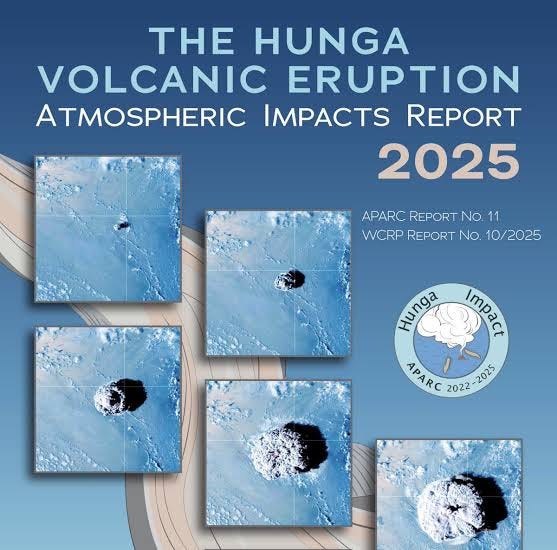
A new report by over 100 scientists finds the 2022 Hunga Tonga eruption did not drive record-high global surface temperatures in 2023/2024. Instead, it caused small surface cooling (~0.05°C) from a moderate sulfur dioxide release (~0.4-0.7 Tg) into the stratosphere. Meanwhile, the eruption also led to pronounced stratospheric cooling, with 0.5-1°C drops in the mid-to-upper stratosphere over the first two years and more than 1°C cooling in the mesosphere afterward.
Higher Injection Improves SAI
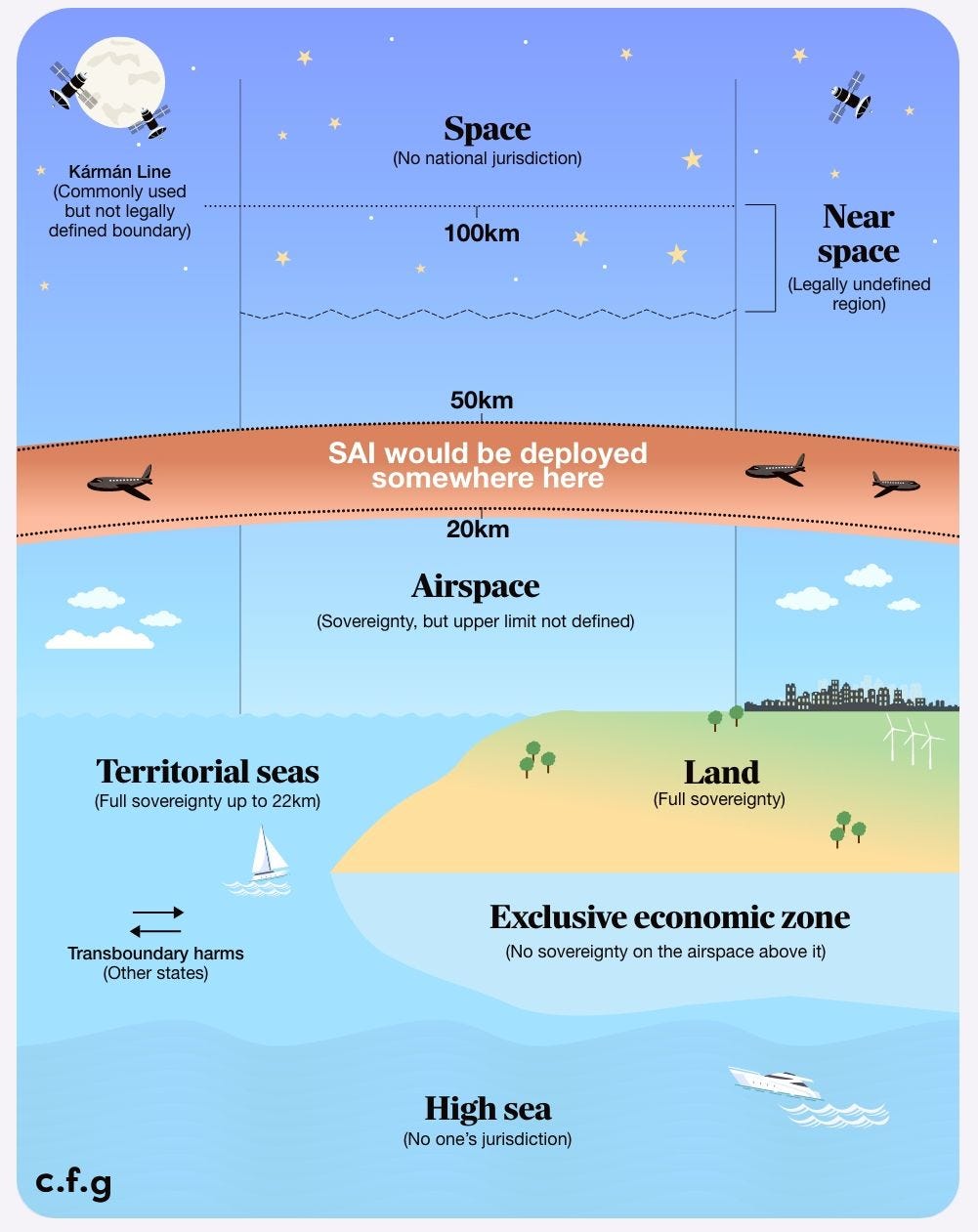
New study finds that injecting sulfur aerosols at 50 km, rather than the conventional 25 km, could reduce side effects, enhance cooling, speed ozone recovery, and preserve more Arctic sea ice. However, the caveat is that aircraft cannot reach this altitude, so researchers propose using reusable hydrogen rockets to deliver 3–8 Tg of SO₂ per year, requiring roughly 30–80 reusable launches with ~500-ton payloads every other day.

For a full recap of last month’s updates, check out our weekly summaries: WEEK 1 | WEEK 2 | WEEK 3 | WEEK 4
And here’s an overview:
RESEARCH PAPERS & THESES
Forcing Susceptibility and Climate Sensitivity to Midlatitude Marine Cloud Brightening | Authors: Haruki Hirasawa, Matthew Henry, Alex M. Mason, et al.
Using three Earth system models, the study finds that midlatitude MCB delivers the most efficient and uniform cooling, closely counteracting greenhouse gas–driven climate change.
Marine Cloud Brightening to Cool the Arctic: An Earth System Model Comparison | Authors: Matthew Henry, Haruki Hirasawa, Jim Haywood, et al.
This multi-model study shows that Arctic MCB with sea-salt aerosols can substantially cool the region and help preserve sea ice under moderate emissions, with limited global side effects.
Doubling down on emissions reductions | Authors: Wouter Peeters
This paper warns that overreliance on adaptation, NETs, and SRM creates moral hazard that weakens mitigation, arguing for prioritizing emissions cuts, tightly limiting NETs, and avoiding or minimizing SRM due to inequitable risks.
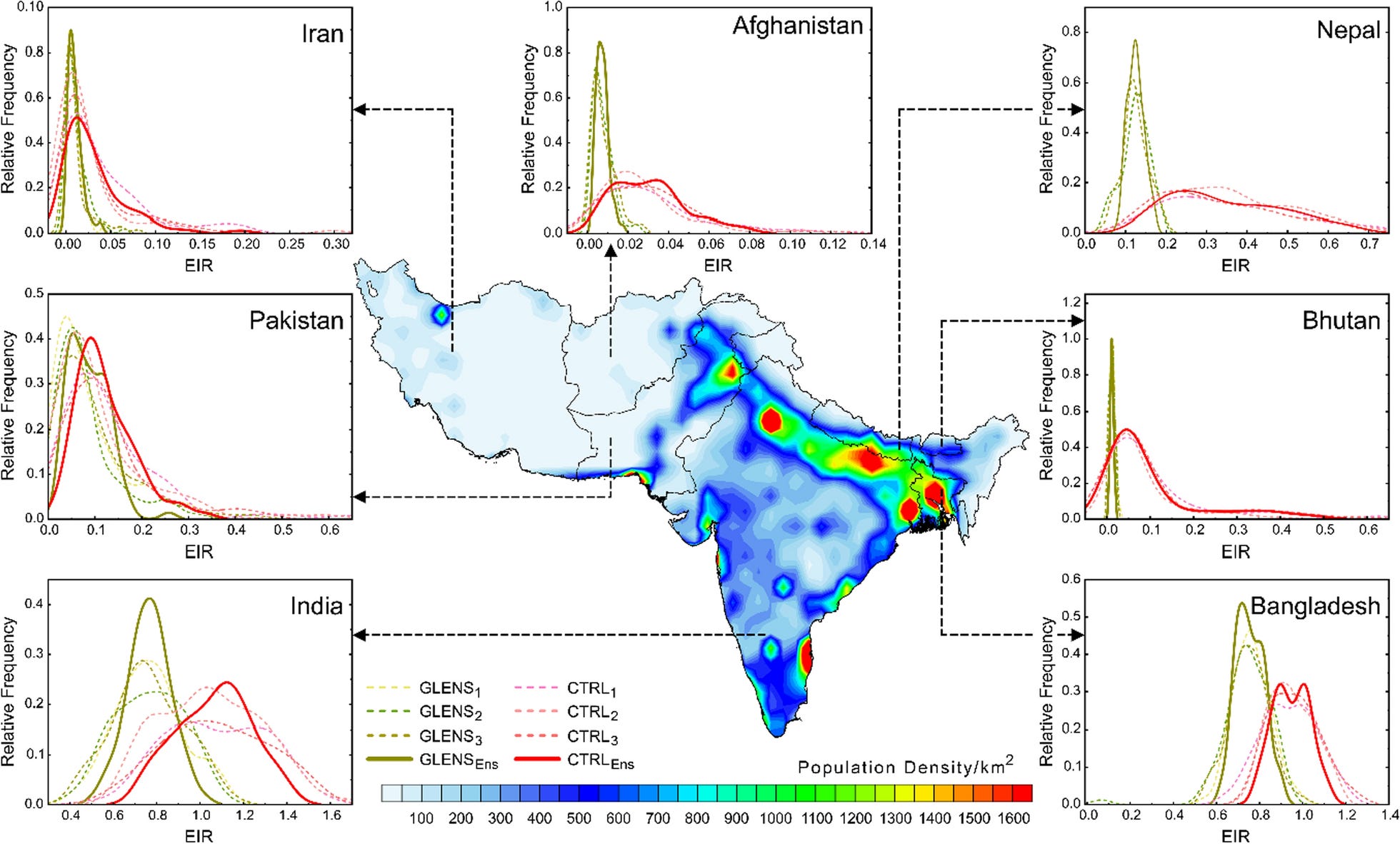
Malaria transmission dynamics under climate change and solar geoengineering in South Asia: a GLENS-based assessment | Authors: Athar Hussain, Muhammad Shoaib & Muhammad Latif
Comparing GLENS-SAI with unmitigated warming, this study finds SAI generally reduces malaria transmission across South Asia but produces localized increases, underscoring the need for region-specific public health planning.
Rethinking Geoengineering Governance Utilizing the Playing God Argument: Considerations of Knowledge, Control, and Benevolence | Authors: Julian Dreiman & Brian Patrick Green
Reframing the “playing God” critique, this paper argues it exposes governance gaps in geoengineering and calls for enforceable mechanisms to ensure control, knowledge, and benevolence.
Solar Geoengineering Strategies Based on Reinforcement Learning | Authors: Heng Quan, Daniel D. B. Koll, Nicholas Lutsko, et al.
This study shows reinforcement learning can rapidly design stable, adaptive SAI strategies in climate models, offering a first proof-of-concept for optimized geoengineering deployment.
Unchaining the atmosphere: rethinking solar geoengineering with Hannah Arendt | Authors: Linde De Vroey
Using Hannah Arendt’s analysis of modern science, the article frames SRM as an unpredictable, irreversible science that challenges human control and political agency.
Impacts of stratospheric aerosol injection on precipitation and winds associated with extratropical cyclones in the Southern Hemisphere | Authors: João Gabriel Martins Ribeiro, Michelle Simões Reboita, et al.
Across major models studied, SAI generally weakens Southern Hemisphere extratropical cyclones, reducing winds and rainfall, though regional and model-specific differences persist.
Building Capacity for Public Engagement on Solar Geoengineering | Authors: Sikina Jinnah, Zachary Dove, Shuchi Talati, et al.
This paper presents a practical toolkit for broad, informed public engagement on solar geoengineering, combining participatory methods with accessible educational resources.
Patenting the Sun? Possible Exclusion of SRM Technologies from Patenting and Risk Regulation | Authors: Wenting Cheng
This article argues that while SRM patents are legally permitted, their risks justify integrating ex ante risk assessment into patent law via a dedicated SRM regulatory framework.
High resolution assessment of the impact of solar radiation modification on future Caribbean wind and solar energy sources | Authors: Matthew St. Michael Williams, Leonardo Clarke, Randy Koon Koon et al.
High-resolution modeling shows SRM generally reduces Caribbean wind resources, with localized increases and uncertain solar impacts, highlighting data gaps.
What would Aldo Leopold think about geoengineering? | Authors: Arthur R. Obst
Applying Aldo Leopold’s land ethic, this article argues that both success and failure of SAI are ethically troubling, revealing a fundamental climate engineer’s dilemma.
Geoengineering Governance and the Law of Climate Intervention: Reimagining Sovereignty in the Age of Atmospheric Manipulation | Authors: Rawnak Miraj Ul Azam
This paper finds SRM governance under international law fragmented and insufficient, advocating a dedicated regime to address its ethical, legal, and environmental risks.
Injection near the stratopause mitigates the stratospheric side effects of sulfur-based climate intervention | Authors: Pengfei Yu, Yifeng Peng, Karen H. Rosenlof, et al.
Injecting sulfur at 50 km rather than 25 km reduces tropical warming, speeds ozone recovery, enhances polar cooling, and better preserves Arctic sea ice.
Assessing the stratospheric temperature response to volcanic sulfate injections by Mt. Pinatubo: insights from the Interactive Stratospheric Aerosol Model Intercomparison Project - Preprint | Authors: Katharina Perny, Timofei Sukhodolov, Ales Kuchar, et al.
Multi-model HErSEA experiments reveal large uncertainties in stratospheric temperature responses to major volcanic SO₂ injections, urging caution in single-model interpretations.
Efficacy assessment of Stratospheric Aerosol Scrubbing as a Counter Climate Intervention strategy - Preprint | Authors: Anthony Crawford Jones, Jim M. Haywood, Matthew Henry, et al.
This study tests Stratospheric Aerosol Scrubbing that reduces aerosol levels and weakens SAI cooling by ~30%, suggesting partial offset potential but requiring further study.
Direct Radiative Impacts of Stratospheric Aerosols on the Tropical Troposphere: Clouds, Precipitation, and Circulation in Convection-Resolving and Global Simulations - Preprint | Authors: Zachary McGraw, Lorenzo M. Polvani
Multi-model simulations show SAI reduces tropical rainfall, with cloud processes driving major uncertainties, while tropical circulation remains largely unaffected.
Regulating the Unthinkable: Climate Interventions as a Test Case for Risk Governance - Preprint | Authors: Alberto Alemanno, Masahiro Sugiyama
This article frames SRM and CDR governance as a critical test of risk regulation and collective decision-making, highlighting legitimacy, justice, law, and market challenges under deep uncertainty.
Impacts of Timing and Level of Stratospheric Aerosol Injection on Coral Thermal Bleaching - Preprint | Authors: Gouri Anil, Cheryl S Harrison, Joanie Kleypas, et al.
CESM simulations show SAI can substantially reduce global coral bleaching, with early deployment limiting warming to 1 °C offering the strongest protection.
The economics of geoengineering - Book Chapter | Authors: Anthony Harding, Juan B. Moreno-Cruz
This article contrasts SRM and CDR, noting SRM is fast and cheap, CDR slow but permanent, and both carry risks and strategic challenges despite potential climate benefits.
JOB OPPORTUNITIES
“The project will develop state of the art climate tools to accurately predict the dispersal and climate impact of proposed hypothetical SAI strategies. You will be working as part of an international interdisciplinary team to reduce some of the fundamental climate modelling uncertainties around SRM.”
“DSG works at the intersection of SRM, climate governance, and international diplomacy, emphasizing justice-centered, globally inclusive, and deeply participatory approaches. Our work is complex and politically sensitive, requiring careful pacing, thoughtful coordination, and strong internal systems.”
Research Associate in Cloud Physics at Imperial College London | South Kensington Campus
“High altitude cirrus clouds have a significant warming effect on the climate, but it is possible that interaction particulates (known as aerosols) could reduce the amount of high clouds and cool the climate. Climate models disagree about the size of this cooling due to a poor understanding of the present-day properties of high clouds. We are looking for a research associate to combine models and observations to reduce this uncertainty and better constrain the past and future impact of humans on the climate.”
Policy Engagement Manager, Africa at The Degrees Initiative | Remote, based in either the UK or Africa & Events Manager at The Degrees Initiative | Remote within the United Kingdom
“The Degrees Initiative is a UK-based NGO that strengthens the capacity of the Global South to evaluate SRM, a controversial proposal for reducing some impacts of climate change by reflecting sunlight away from the Earth.”
“UCLA School of Law’s Emmett Institute on Climate Change and the Environment is now accepting applications for the Earth System Interventions Fellowship in Environmental Law and Policy for the academic years 2026-2028. This is a full-time two-year fellowship beginning as soon as July 2026. Within the Emmett Institute’s project on the law and policy of earth system interventions, the fellow will conduct research and analysis on international and domestic legal and policy issues related to proposed climate-altering interventions such as solar radiation modification (SRM). The fellow will also assist with project and Institute activities such as conferences, workshops, and expert working groups.”
WEB POSTS & REPORTS
SaltWire – Gwynne Dyer: Is geoengineering the solution to climate change?
CFG – FAQ Spotlight: Doesn’t international law already prevent the deployment of Stratospheric Aerosol Injection?
Inevitable & Obvious – What It Takes to Make Cooling Interventions Thinkable
MIT Technology Review – How one controversial startup hopes to cool the planet
MIT Technology Review – Solar geoengineering startups are getting serious
The Standard – Lights out: can dimming the sun really save us from global warming?
Eos – Could Stratospheric Aerosol Injection Help Save Corals from Bleaching?
IJR – Zeldin Defends Those Worried About Tinkering With The Sun: ‘Not Conspiracy Theorists’
DSG – Elevating Global Perspectives in SRM Governance: Introducing DSG’s 2025 Early Career Fellows
LinkedIn – Paris plus ten: We need courage more than hope, as temperatures rise and geoengineering potentially looms on the horizon
Peter’s Substack – The Haline Choke – Beware where you brighten the clouds
DSG – SRM Governance Horizons: Towards A Readiness Framework For Anticipating Tomorrow’s Choices
The London Free Press – Dyer: Geoengineering part of climate change solution
Physics Today – The urgent need for research governance of solar geoengineering – Shuchi Talati
The Spec – Scientists urge stronger focus on geoengineering amid rising global temperatures
Cabin Radio – Is it time to try climate engineering to save Arctic sea ice?
Pearls & Irritations – Climate hot takes for 2025
Wach Fox57 – South Carolina lawmakers weigh a ban on “chemtrails,” even as skepticism fills the room
Operaatio Arktis – Nordic Climate Security Leadership and Approaches to Climate Intervention Research
Operaatio Arktis – UNEA-7 and the State of Global Climate Action: Where Does Research and Governance of Solar Radiation Management Stand?
SRM360 – “Make Sunsets” in Mexico: Lessons for SRM Governance
LinkedIn – When “Inclusion” Dilutes Justice: Why Solar Radiation Non-Use Must Not Be Reframed Away
The Portugal News – Geoengineering for Grown-Ups
The Degrees Initiative – 2025 in review: broadening the tent
Waterstones – The Politics of Geoengineering: Perspectives from the Social Sciences – Springer Climate (Hardback)
Peter’s Substack – Sunsets Not Included – A Reality Check on Balloon Geoengineering
Le Monde – “Private geoengineering comes at a cost, and that cost is public”
One Percent Brighter – What if we’re on a much worse climate trajectory than we realize?
E&E News by Politico – Betting on climate failure, these investors could earn billions
The Guardian Editorial – The Guardian view on solar geoengineering: Africa has a point about this risky technology
Peter’s Substack – A Climate Solution Scheduled for After the Emergency
The Policy Edge – WMO Conference Calls for Global Cooperation to Govern Weather Modification Technologies
Phys.Org - Seeding jet exhaust with ice-nucleating particles could reduce aviation’s climate impact
DSG - Solar Radiation Modification Governance Brief for UNEA-7
Earth.Org - Why Solar Geoengineering Research Is Now a Moral Imperative?
Peter’s Substack - SAI, Pinatubo, and the Missing Conversation About Food Security
Plane Sight News - A Look at the Changing SAI Airscape
Planetary Sunshade Foundation - Governing Sunlight Reflection: A Review of Global Efforts
Warming Warrior - Thermodynamic Geoengineering: The Third Pillar of Climate Intervention
Just Security - As Solar Geoengineering Enters its Startup Phase, Governments Must Address Emerging Security Risks
Inevitable & Obvious - A Climate Goal for the Overshoot Era
The Washington Post - Private companies have raised millions to block the sun. What could go wrong?
Peter’s Substack - How Global Dimming Helped Cause the Sahel Famine – And Why Its Reversal Is Now Superheating the Atlantic
DSG - Africa’s High-Stakes Discourse on SRM: Risks, Responsibilities, and Regional Realities
The Liminal Space - Building Engagement in a Contested Climate Field
ETH Zurich - Diamonds, dust and television: Sandro Vattioni wins China’s “IgNobel Prize”
Peter’s Substack - An Albedo Accord: Why Cooling the Planet Must Come Before Everything Else
Vermont Daily Chronicle - Here comes the sun—or not?
EBSCOB - The Great Barrier Reef, Collapsing?
DSG – UNEA-7 and the Quiet Conversation on SRM
Independent – Out of a superhero movie: Companies are coming up with plans to block out the sun
Rolling Stone – Chemtrails Aren’t Real. So Why Are Politicians Passing Laws About Them?
Havasu News – Arizona bill would ban controversial climate-cooling method involving sunlight reflection
DSG, IAI, The Degrees Initiative - From Science to Policy: Navigating the Complexities of Emerging Climate Techniques in the Americas (ENG) - Multilateral Simulation Workshop on Solar Radiation Modification
UPCOMING EVENTS
08 January | Online - Carbon Removal Won’t Scale in Time by MEER
30 January | Online - Could solar geoengineering help protect coral reefs? by SRM360
9-13 March 2026 | Kyoto, Japan - CMIP Community Workshop (CMIP26)
03-08 May | Vienna, Austria & Online - EGU26
13-15 May | University of Nottingham - IAA Planetary Sunshade Workshop by Planetary Sunshade Foundation
17-19 March | Tokyo, Japan - Sixteenth GeoMIP 2026 Meeting by Alan Robock and Daniele Visioni
28 – 29 May | Belgium - International Forum on Solar Radiation Modification Research Governance by Co-Create
20-21 June | United States - Bridging the Knowledge Gaps in Climate Engineering with Experiments, Models, and Observations by Gordon Research Seminar
21-26 June 2026 | United States - Gordon Research Conference - Bridging Observations, Models, and Impacts in Solar Radiation Modification Research
Add our Solar Geoengineering Events Calendar to your default calendar in 2 ways:
Head to this link: https://teamup.com/ks64mmvtit583eitxx
Sync specific event: Click the event → menu (≡) → Share → choose your calendar → Save.
Or sync all events: Menu (≡) → Preferences → iCalendar Feeds → Copy URL → Add to your calendar settings → Subscribe.

PODCASTS
Adaptation vs Geoengineering - Gambill | Reviewer 2 does geoengineering
“@geoengineering1 interviews Paul Gambill to discuss the intricate dynamics between adaptation and geoengineering. Drawing on his experience as the former founder of Nori, the first carbon removal marketplace, Paul reflects on why scaling durable carbon removal has proven so difficult and what those barriers suggest for stabilizing the climate in an era of overshoot.
The conversation then turns to the growing relevance of geoengineering approaches, including solar radiation management (SRM) and other large-scale interventions, and the conditions under which they might move from taboo to serious consideration. The episode explores a spectrum of techniques that blur the line between adaptation and planetary engineering, from ocean iron fertilization and ice-sheet stabilization to localized cooling strategies. Throughout, Paul stresses the need for public awareness, strategic policy development, philanthropic investment, and credible long-term governance to ensure that any future climate interventions are deliberate, legitimate, and responsibly managed.”
“In this episode, Nate is joined by climate philanthropist Kelly Erhart to discuss the urgent state of climate science and emerging response strategies beyond traditional mitigation and adaptation. Kelly explains the climate research that reveals increasingly alarming risks, including natural feedback loops such as glacier collapse, declining albedo (the reflectivity of Earth), and methane release from melting permafrost. They also discuss frontier emergency climate interventions such as oceanic carbon sequestration, atmospheric methane removal, and glacier stabilization strategies, among others – while emphasizing that none of these replace the need for the drastic reduction of emissions.”
“This week, hosts Tom Rivett Carnac and Paul Dickinson delve into the rapidly emerging - and faintly surreal - world of solar geoengineering.
Politico journalist Karl Mathiesen joins us to unpack his investigation into Stardust, a VC-backed startup claiming it’s ready to spray particles into the stratosphere. Karl explains why this technology is suddenly attracting serious money, why scientists still have major questions about safety and side effects, and how in some places, the global regulatory landscape is almost nonexistent.
And from technological disruption to political stability, former New Zealand Prime Minister Jacinda Ardern, reflects on the leadership we need. She’s unflinchingly honest about why so many politicians still choose “fear and blame” over long-term action, and why climate remains New Zealand’s “nuclear-free moment.” A test of political character as much as policy. Her argument is hopeful: people, she insists, are ahead of their politics.
As we march towards the end of 2025, these conversations map the terrain of 2026: technologies racing ahead, governance lagging behind, and a public increasingly hungry for leaders willing to act with integrity. If you want to understand where the climate fight is really heading this episode is essential.”
“Long a pariah climate solution, Stratospheric Aerosol Injection (SAI) is having its mainstream moment. As the climate movement ponders the planet’s deep overshoot, more conversations about geoengineering, solar radiation management, global cooling, etc. are taking place in the open.
Moreover, for-profit entities are raising venture rounds, with Stardust recently announcing a $60M Series A to commercialize their approach to SAI. This moment is feeling genuinely new, and it feels this way to today’s guest Dr. Shuchi Talati of The Alliance for Just Deliberation on Solar Geoengineering too.”
Cynthia Scharf ‘Climate Tech - The Technologies of Desperation’ | The New Abnormal
“This episode of ‘The New Abnormal’ podcast features Cynthia Scharf, a Senior Fellow at the Centre for Future Generations, a European think tank, leading their work on Climate Interventions. Issue of trust, global equity, behavioural psychology, archetypes and narrative are key to their work.”
YOUTUBE VIDEOS
Events Recording: Arctic Repair 2025 - Playlist | Centre for Climate Repair

The CSEi Seminar Series brings researchers from the natural and social sciences, industry practitioners, and policymakers to the University of Chicago to explore critical questions in climate systems engineering. The series is intended to stimulate new research collaborations on campus and build connections with experts outside the university.”
Climate Models (Featuring Tiffany Shaw) | UChicago Climate Systems Engineering initiative
“Tiffany Shaw explains the scientific basis for predicting how the climate changes in response to emissions of greenhouse gases and aerosol pollution and examines what climate models can and cannot tell us about what to expect.”
“David Keith wraps up the lecture series, discusses the overall field of climate systems engineering, and speculates about its future.”
Why SRM/Solar-Geoengineering is Required (with Q&A) | Climate Chat
“In this Climate Chat episode, Host Dan Miller present why Solar Geo-engineering (a.k.a., Solar Radiation Management or SRM) is now required to avoid more than 2ºC of warming and catastrophe. The presentation is about 15 minutes and is followed by Q&A with YouTube Live listeners.”
The Case for Polar Solar Engineering - Wake Smith at Arctic Repair 2025 | Centre for Climate Repair
“Wake Smith is a Lecturer in the Yale School of the Environment and a Research Fellow at the Mossavar-Rahmani Center for Business and Government at the Harvard Kennedy School. His book Pandora’s Toolbox: The Hopes and Hazards of Climate Intervention was published by Cambridge University Press in March 2022. He has published more than 15 papers on the aeronautics, costs, and governance of solar geoengineering and developed preliminary designs for high altitude deployment and research aircraft. That research has been widely cited in scientific assessments by the European Commission, the UN Environment Program, and the US National Academies. He previously served as Chairman and President of Pemco World Air Services, Chief Operating Officer of Atlas Air Worldwide Holdings, and President of the flight training division of The Boeing Company. He holds a BA from Yale and an MBA from Harvard.”
Contrails are not ‘chemtrails’ and are, in fact, a normal weather occurrence | ABC News
“In this episode of Climate A-to-Zee, ABC News Chief Meteorologist and Chief Climate Correspondent Ginger Zee debunks the “chemtrails” conspiracy theory by explaining why aircraft contrails are a normal occurrence when certain weather conditions are in play.”
A Climate Advisor: Sir David King’s Journey | Climate Emergency Forum
“This Climate Emergency Forum episode features an in-depth conversation with Sir David King, one of the world’s most influential climate scientists and diplomats, recorded during COP30 in Belém, Brazil. Herb Simmens, Dr. Peter Carter, and Paul Beckwith explore Sir David’s “four Rs” framework—Reduce emissions, Remove greenhouse gases, Repair the climate, and build Resilience—and why he now believes we have moved beyond the point where emissions cuts alone can secure a safe future. From accelerating polar ice loss to growing extremes in heat and weather, he explains the scale of the crisis and the urgent need for both rapid decarbonization and targeted climate repair.”
Good COP, Bad COP: First reflections on COP30 | Centre for Climate Repair
“Good COP, Bad COP brings you an expert panel to discuss the highs and the lows of the world’s biggest climate conference. After the 30th “Conference of the Parties” (COP), we’ll ask: what really happened? What was agreed, and what was left unspoken? And after all these years, what do we do next?”
“David Keith and Tiffany Shaw review the expected climate responses to SRM, potential side effects, and what can be learned from past aerosol pollution, highlighting the limits and uncertainties of experiments.”
“Paul Gambill discusses his work on educating the public to understand that sunlight reflection methods will be needed in addition to emissions reductions and greenhouse gas removals to address the global heating emergency.”
“Rising greenhouse-gas emissions from human activities are causing rapid changes to Earth’s climate. Despite efforts to mitigate emissions to limit warming below 1.5 degrees Celsius, changes in temperature appear to be heading for a temporary overshoot with unknown temperature peak and duration, and impacts to the Earth system. Climate overshoot, i.e., temporarily exceeding a temperature limit, is a relatively new concept, and the associated impacts, mitigation and adaptation needs are an active area of research. Current space-based observing systems to monitor the land, ocean, cryosphere and atmosphere were designed during a phase of relatively stationary climate conditions or with the assumption that climate policies will stabilize temperatures in a fairly linear way.
The characteristics of climate overshoot require rethinking and reevaluating satellite mission requirements related to temporal revisit, spatial resolution, spectral range, signal to noise, and overpass time. For example, abrupt permafrost thaw in high-latitudes, greenhouse-gas emissions from warming tropical wetlands, rapid glacier melt, ocean heatwaves and impacts on biogeochemistry, have unique signatures that current observing constellations will need to track for impacts, reversibility and stability. Additionally, an increasing number of climate intervention efforts to avoid or minimize climate overshoot, linked to carbon dioxide removal, methane removal, and solar radiation management, have their own set of specific monitoring requirements. Advances in technology, new partnerships between public, private and commercial organizations, and an expansion of computing power and algorithms have potential to keep pace with expanding observing requirements.”
Are emissions cuts on track to avoid catastrophic impacts? | SRM360
“SRM360 hosted a live discussion on emissions cuts a decade since the Paris Agreement, how emissions might develop, and what role solar geoengineering (SRM) could play.”
Anni Pokela - How to change our climate reality, ATLAS25 | Operaatio Arktis
“ATLAS25 was organised to bridge scientific understanding on Earth System Tipping Points (ESTP) with strategic policy-making including approaches to climate intervention research. The aim was to elevate Nordic leadership and cooperation in ESTP risk management as an issue of comprehensive security. While this was an ambitious undertaking, we made important progress. The conference drew 143 participants, with 215 attending the Think Corner session and hundreds viewing the livestream. The recording of this session has already sparked a lot of discussion. Media coverage on ATLAS25, our speakers and messages has had a reach of millions of people through major news outlets like Helsingin Sanomat, Yle news, MTV news, Hufvudstadsbladet, and New story, bringing critical understanding of Earth System Tipping Points to wider public attention. Engaging policymakers more widely in addressing ESTPs requires continuous efforts, although the widespread media coverage has sparked discourse among many policy-makers.”
“If a super-volcano were to erupt today, it would likely eject so much sulfur dioxide into the stratosphere that the planet would cool by several degrees Celsius for up to 5 years. This cooling would very likely disrupt global agriculture and cause massive global food shortages, starvation, and huge numbers of casualties.
Such a super-volcano, like Toba that erupted 74,000 years ago caused human population die off and the subsequent DNA signature called a “genetic bottleneck” whereby the science indicates that we had less than 10,000 humans surviving that time period.
I chat about the main climate-altering super-volcanos (and lesser volcanoes) that have occurred in the past, and the risks of the next one happening and where that may occur.”
COP30: Sue Biniaz chats with Centre for Climate Repair | Centre for Climate Repair
“I wouldn’t want the world to be in a situation in the future where we are scrambling around for tools... and we say we don’t really have them or haven’t researched them because people back in 2025 were against it. To me it seems the responsible thing to do, to know what the options are.”
As the former US Lead Negotiator, Sue Biniaz got to enjoy the “greater metropolitan COP” outside of the negotiation rooms for the first time in decades. Yesterday, she spoke to us about the importance of showing up, her hopes for COP30, and the need for research on SRM.”
James Hansen: ‘What we witness now is scientific reticence on steroids’ | Climate Chat
Follow us on:
Twitter | Bluesky | LinkedIn | Substack | Google Group | Podcast 1 | Podcast 2
Support us here:
We put significant time and effort into compiling this resource for you. If you can, please consider becoming a paid subscriber. Your support sustains this work and helps us reach a wider audience.
Incredible roundup covering so much ground. The finding on injecting sulfur at 50km versus25km really caught my attention because it flips the aircraft limitation problem into a rocket logistics challenge. Back when I was working on atmospheric modeling, we always assumed the lower stratosphere was theceiling for deployment. This hydrogen rocket approach could actually make higher-altitude injection economically viable if reusable launch costs keep dropping, though the launch cadence you mention (every other day) would need some serious infrastructure planning.
Great info as usual Andrew! Do you know if there is any endeavor for a general, or better yet, "srm cocktail" podcast/webinar with all the notables from sai/mcb/surface brightening ? I know each concentrates on their own expertise but like many things the sum is greater than just the parts. It would be great to see srm logistics.